Type / to choose a block
Type / to choose a block
Exploring Presence, Meta-Dialogue & the Space Between Us – a 90-minute experiential workshop
What happens when we stop talking about our experiences and begin speaking from within them, as they unfold?
Most of our conversations revolve around what has happened, what might happen, or what we think about something. Rarely do we pause to notice what is actually happening in the present moment, within ourselves, in another person, and in the relational space we are creating together.
We-Space is an experiential practice of relational mindfulness that invites us to explore precisely this dimension of human connection. At its heart is Noticing, the simple yet surprisingly powerful practice of slowing down, bringing awareness to our sensations, emotions, thoughts, and impulses, and learning to express them as they arise.
Through guided relational exercises, participants will be introduced to meta-dialogue, a way of communicating in which we become aware of, and begin speaking about, the experience of relating itself. Rather than remaining caught in the content of a conversation, we learn to recognize our interpretations, observe our habitual reactions, and become curious about what is emerging between us.
As our attention shifts from the individual to the relational field, something interesting can happen: we begin to experience connection not only as an idea or an emotion, but as something tangible, embodied, and co-created.
This workshop is not primarily about acquiring another communication technique or understanding a theoretical concept. It is an invitation to directly experience a different quality of presence, one that can open new possibilities for authentic connection, mutual understanding, and collective awareness.
Some experiences are difficult to explain in words because their meaning lies in the experience itself. We-Space is one of them.
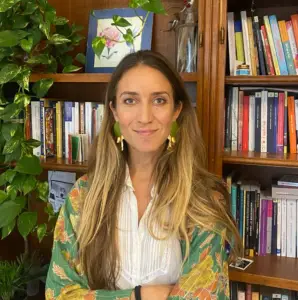
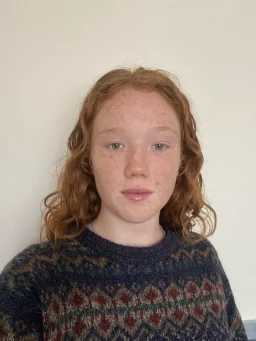
For over a decade, Nora has worked with companies and organizations in the fields of personal development, leadership, and relational intelligence, while also supporting individuals on their journeys of self-discovery and personal growth through counseling.
With a Master’s degree in Sociology and Critical Theory from Goldsmiths, University of London, her work is grounded in a deep understanding of human relationships, social dynamics, and the cultural structures that shape our experiences. She also holds a Diploma in Transpersonal Bioenergetic Counseling (ITI) and a Master’s in Coaching from the Institute for Aliveness, and is currently pursuing further training in Clinical Psychology in Italy.
Her multidisciplinary approach bridges sociological, psychological, and somatic perspectives, integrating Astrology and Human Design as complementary tools for self-exploration, deeper awareness, and more authentic connections.

Have you ever been so caught up in a problem that you just can’t see a way out? When words fall short and logical thinking isn’t enough, there’s another kind of intelligence we can turn to one we reach through our hands, not our heads.
In this one-hour session, we’ll explore Draw Your Answer: a simple, powerful practice for gaining insight into whatever situation you’re grappling with. Drawing or painting a problem lets you take it out of your head and see it from a different perspective. By shifting from thinking to visualizing, fresh insights and new options can appear often ones you couldn’t have reasoned your way to.
This isn’t about artistic skill or making something beautiful. It’s about using art as a way to explore, reflect, and understand to engage with your emotions, intuition, and subconscious, all of which have real guidance to offer.
No experience needed. Just bring a dilemma you’d like to work on: something recent, something unresolved from the past, or even a current project you’d like more clarity on. It can be big or small. Bring some paper and whatever you like to draw with pens, pencils, pastels, crayons and an open mind.
Come and discover what your own inner wisdom already knows.
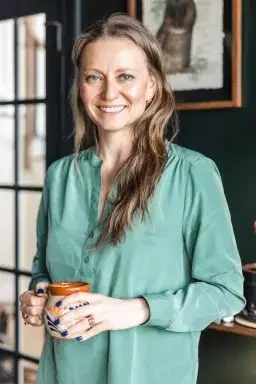
Marina Kurikhina is a creative intelligence practitioner and educator whose work has been featured in The New York Times, CNN, and other national media. She previously served on the faculty at the Esalen Institute and currently mentors at Relational Awakening.
Marina developed the Creative Subconscious Method and has taught it to thousands of people worldwide. She now trains therapists, coaches, and facilitators to integrate the approach into their group work and client practice—particularly during transitions when conventional approaches fall short.
She offers talks on creative thinking, problem-solving, and resilience, along with experiential workshops and group sessions.
.
An invitation to ignite, enliven and expand your connection to a Greater Guidance through a channelled Guided Journey…
We are all capable of connecting intuitively to a source of wisdom and knowing. It could be one’s Soul, Angels, Animals Spirits, Guides, Ancestors (to give a few examples) or something that is beyond a name or label – and none of these are mutually exclusive! Our beliefs and experiences are diverse. The term “Greater Guidance” serves as an umbrella for this ineffable, loving wisdom. How we sense, perceive and receives prompts, messages and signs is also different for each of one us. This changes over time, as we ourselves change and develop. There is no right or wrong way; the magic happens when we nurture our own way.
You will be led on a Guided Journey, to have an experience. It is not just what is spoken, but the energy being brought through, to create a conduit and container. Trance mediums, in an expanded state of consciousness, can channel words, art, healing – but the essence of it all is energy. Tanya will co-create an energetic space to facilitate your abilities to connect, receive and discover.
Often we have preconceptions about what should happen during a Guided Journey. Cast these aside and be open to exploring and expanding your personal way of communing with the Cosmos!
The aim is not to have a one-off experience, but to use this as a stepping stone to develop your relationship with this Greater Guidance, in your daily life.
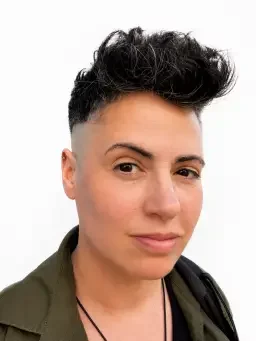
 Tanya is a psychic medium with a passion for trance mediumship and working with expanded states of consciousness, including Holotropic Breathwork. She has trained and studied evidential and trance mediumship under a number of Arthur Findlay College tutors and internationally renowned mediums. Tanya works in a one-to-one or group setting, to support individuals in developing their intuition and connection to a Greater Guidance, and in so doing, foster their self-empowerment. She also offers readings that are a mix of modalities and seeks to involve her client in the process.

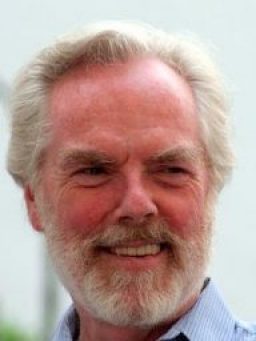
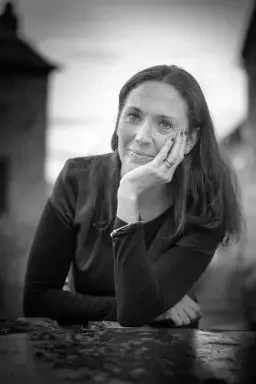
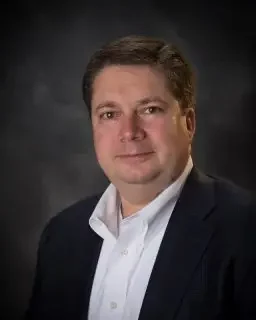
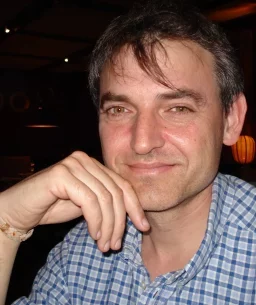
 Vasileios Basios is a physicist, conducting interdisciplinary research on the foundations of complexity science and nonlinear systems, self-organization and complex matter. During his formative years, he was tutored by Ilya Prigogine, at ULB where he received his PhD, and by Emilios Bouratinos on meditation and philosophy. He is currently interested in the complex interface between action and information. Other interests include the history of ideas in science and their role in the transformation of science beyond the prevailing naïve, materialistic, mechanistic-reductionist world-view. With others from PEAR, he initiated the Mind-Matter-Mapping Project and has since published several essays for ICRL. He is also a member of the Board of the Scientific and Medical Network and the Steering Team of the Galileo Commission. Vasileios is inspired by the prospect of introducing self-reflection into the practice and understanding of science, and the emergence of a Self-Reflexive Science of Consciousness.
 Bob (Brahmatirtha) was born in Newark, New Jersey, in 1949, completed his B.S. in Chemistry at Rensselaer Polytechnic Institute in 1971, and received his M.S. in Geology from Rutgers University in 1975. After a twenty-year career serving as a geologist and vice-president of a large regional environmental company, he currently works as an environmental consultant to state governments. He has been a member of the Bhaktivedanta Institute since the inception in 1976, giving a presentation at their First International Conference on Life Comes from Life in 1977, and working on a multitude of projects with R.L. Thompson (Sadaputa) from 1995 through 2008. He is also a certified court mediator. He now serves as the Director of the Bhaktivedanta Institute for Higher Studies.
 Ian Cook is a Professor of Psychiatry and Biobehavioral Sciences at the David Geffen School of Medicine at UCLA, where he directs the UCLA Depression Research and Clinic Program at the Semel Institute and was the inaugural holder of the Joanne and George Miller and Family Endowed Chair in Depression Research at the Brain Research Institute. He has been a part of the PEAR/ICRL family since 1980, when he was among the first undergraduate students to conduct research at the PEAR lab. He graduated from the Yale School of Medicine and pursued his residency training and research fellowship at UCLA. His research has focused on understanding the relationships among the mind, the brain, and the body, and in translating developments in technology into more effective treatments for disorders of mood and cognition.
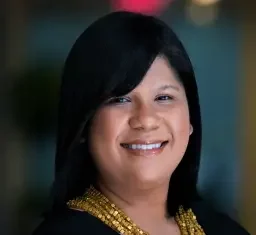
 degree from Hollis University and has accumulated a diverse work experience, spanning multiple disciplines: education, technology, business and law, predominately in support and administrative roles. She currently works for the College of New Jersey in its Office of Disability Support Services. Lynn Ann has been an administrative assistant to ICRL’s President since 2011, and has extensive familiarity with the organization’s structure and activities, along with a deep commitment to its mission.

 The largest dataset collected at PEAR used Random Event Generators, or REGs. These devices were essentially electronic coin flippers that produced a series of 1’s and 0’s; operators were instructed to influence the machines to produce more 1’s than 0’s or vice versa.