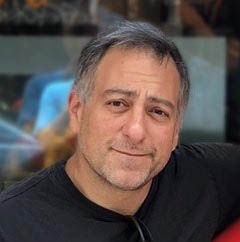
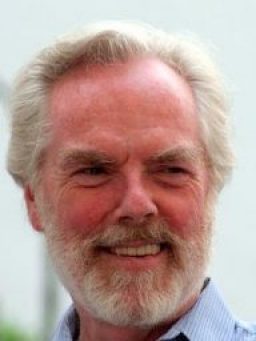
Jeffrey Dunne (Chairman)
 Jeffrey Dunne is Chairman of the Board of ICRL, and a Research Scientist at the Johns Hopkins University Applied Physics Laboratory, where he undertakes research in data sciences and artificial intelligence. He has degrees in both engineering and physics, and a diverse history of intellectual pursuits in energetics, consciousness and cognition, philosophy, linguistics, acoustics, information management, data fusion, virtual and augmented reality, and communications. Jeff’s current research foci include syntropy and the nature of time, and his personal interests include acting and the writing of plays, books, and music. His first published book, Nexus, introduces – in the guise of a fictional novel – the concept of syntropy, and emphasizes the criticality of balance, open-mindedness, and other key insights central to consciousness studies.
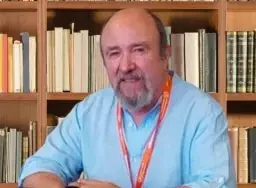
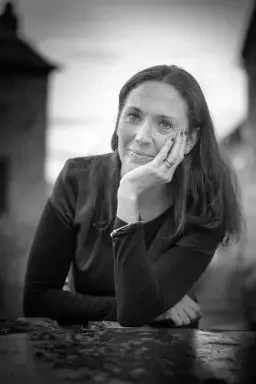
Vasileios Basios
 Vasileios Basios is a physicist, conducting interdisciplinary research on the foundations of complexity science and nonlinear systems, self-organization and complex matter. During his formative years, he was tutored by Ilya Prigogine, at ULB where he received his PhD, and by Emilios Bouratinos on meditation and philosophy. He is currently interested in the complex interface between action and information. Other interests include the history of ideas in science and their role in the transformation of science beyond the prevailing naïve, materialistic, mechanistic-reductionist world-view. With others from PEAR, he initiated the Mind-Matter-Mapping Project and has since published several essays for ICRL. He is also a member of the Board of the Scientific and Medical Network and the Steering Team of the Galileo Commission. Vasileios is inspired by the prospect of introducing self-reflection into the practice and understanding of science, and the emergence of a Self-Reflexive Science of Consciousness.
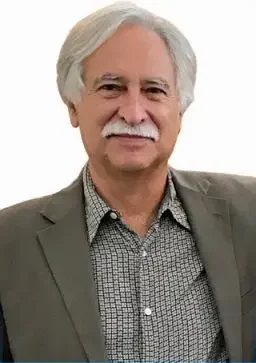
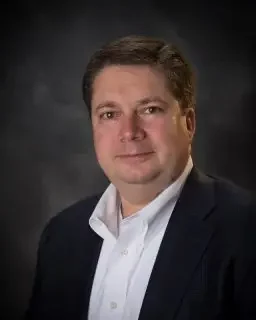
Robert Cohen
 Bob (Brahmatirtha) was born in Newark, New Jersey, in 1949, completed his B.S. in Chemistry at Rensselaer Polytechnic Institute in 1971, and received his M.S. in Geology from Rutgers University in 1975. After a twenty-year career serving as a geologist and vice-president of a large regional environmental company, he currently works as an environmental consultant to state governments. He has been a member of the Bhaktivedanta Institute since the inception in 1976, giving a presentation at their First International Conference on Life Comes from Life in 1977, and working on a multitude of projects with R.L. Thompson (Sadaputa) from 1995 through 2008. He is also a certified court mediator. He now serves as the Director of the Bhaktivedanta Institute for Higher Studies.
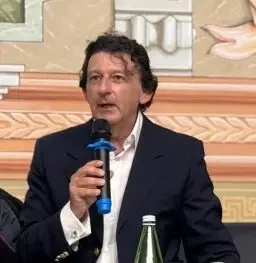
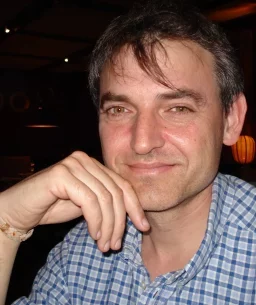
Ian A. Cook
 Ian Cook is a Professor of Psychiatry and Biobehavioral Sciences at the David Geffen School of Medicine at UCLA, where he directs the UCLA Depression Research and Clinic Program at the Semel Institute and was the inaugural holder of the Joanne and George Miller and Family Endowed Chair in Depression Research at the Brain Research Institute. He has been a part of the PEAR/ICRL family since 1980, when he was among the first undergraduate students to conduct research at the PEAR lab. He graduated from the Yale School of Medicine and pursued his residency training and research fellowship at UCLA. His research has focused on understanding the relationships among the mind, the brain, and the body, and in translating developments in technology into more effective treatments for disorders of mood and cognition.
Lynn Ann Cornell
Lynn Ann Cornell, Secretary of ICRL, holds a BA  degree from Hollis University and has accumulated a diverse work experience, spanning multiple disciplines: education, technology, business and law, predominately in support and administrative roles. She currently works for the College of New Jersey in its Office of Disability Support Services. Lynn Ann has been an administrative assistant to ICRL’s President since 2011, and has extensive familiarity with the organization’s structure and activities, along with a deep commitment to its mission.
ICRL has grown substantially from its origins in Princeton, NJ. While we work with people located around the globe on projects centered in many countries, we also maintain a physical presence in two locations, with a third on the way.
 The majority of our work is done out of Maryland, although that is steadily shifting to a beautiful 72-acre property outside of Roanoke, Virginia. Since 2024, this location has been the site of informal gatherings, our rekindled Academy gatherings, and the official kickoff of the Consciousness Alliance.
We are also in the process of establishing an ICRL presence on the Mediterranean coast of Spain, between Alicante and Valencia, which will hopefully become active in 2026.
If you are interested in making use of these spaces, you can use the below form to start the conversation.
PEAR used a wide variety of experiments to study psi phenomena. The mechanisms hit all essential dimensions of the physical – motion of physical objects, fluid mechanics, acoustics, light, heat, quantum processes, and so forth. Two of the most famous experiments were Murphy and the REG studies.

Along one of the walls of the PEAR lab was a Random Mechanical Cascade machine. It comprised a series of pegs through which thousands of balls would fall into bins, creating a Gaussian distribution, and operators would attempt to influence the balls to fall more to the left or the right. The device was named Murphy while it was being built because it seemed to be the embodiment of Murphy’s Law – anything and everything that could possibly go wrong invariably did, and generally with the result that the laboratory staff had to spend hours picking up 9000 marbles from the floor of the lab.
 The largest dataset collected at PEAR used Random Event Generators, or REGs. These devices were essentially electronic coin flippers that produced a series of 1’s and 0’s; operators were instructed to influence the machines to produce more 1’s than 0’s or vice versa.
While all of the experiments demonstrated the same kind of effects, the REG experiments were the most commonly performed for a few reasons. They were considerably quieter than the process of dropping thousands of balls through pegs, the data collection was simpler and faster, and as electronics reduced in size, the REG technology eventually became very portable.
This has been a very brief answer, but we encourage you to check out our larger introduction to the PEAR lab here.