The Dimensions of Love
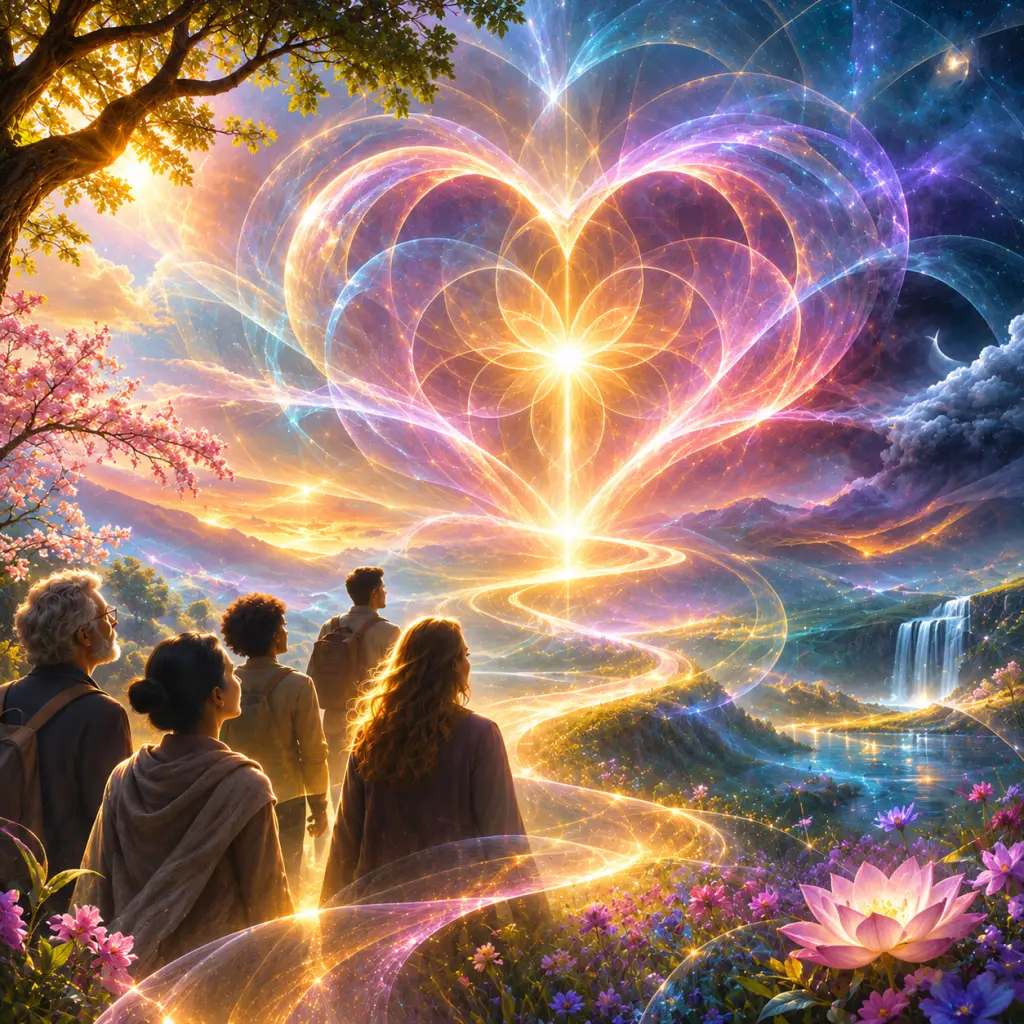
An ICRL Journey to explore the nature of Love—what meanings underlie the concept, how does it manifest in ourselves and beyond, and how is it connected to the fabric of reality?
Genesis
In 2023-2024, ICRL convened a group of interested people to participate in a monthly series of conversations on the topic of “The Information Field”. It started with asking simple questions like “what is information?” and “what is a field?”, and we quickly realized that sometimes the simplest questions are the most difficult to answer. After roughly a year, the group had found answers to those questions and many others—perhaps not definitive, universal answers, but answers that captured the views of the group, both as individuals and as the team we had become.
The journey was rewarding. Real relationships were forged, impactful insights emerged. It was a process worth repeating, and so here we are.
So why “The Dimensions of Love”? Perhaps it is because there is arguably nothing so important in all the universe as Love. Perhaps it is the irony that for something so important, English provides very few words to differentiate nuances (I love my cat, I love chocolate ice cream… ohh so different—at least I hope). But certainly because if one were to choose something to understand better, Love is a pretty damn good choice.
Focus
Love is obviously a big topic, and it is natural to wonder if we can be more specific. Because this is a journey, not a predefined lesson, the most important factor in determining what we will explore is the people involved. But if we had to guess, there are some questions that will almost certainly arise. Is Love an emotion, a relationship, a choice, a fundamental aspect of reality, or something else entirely? Or is it all of these together? What are the different types of love that we experience, and must there always be a direct object involved (or even a subject)? How does Love relate to other experiences such as fear, hate, compassion, and empathy? Does Love have shadows? Does it have Consciousness?
If these are the kinds of questions you find interesting to examine, this is the Journey for you.
Structure
The first thing you probably noticed in the summary is that there weren’t specific dates defined. That’s intentional, as we will determine the optimal dates and times based on the people in the cohort. What is pretty safe to assume, however, is:
- We will meet online monthly, and probably for 1-2 hours at a time
- The journey will undoubtedly go for at least 12 sessions, but perhaps longer based on our collective needs and interests
- We will record the discussions, but only for the use of the people who are part of the cohort in case they had to miss one or want to review something
- We will aim to create some kind of output from our time together to share the essence of our journey with others (but the specific form of it will depend on the journey!)
- Because working as a coherent group matters, we will only accept up to 15 people in a cohort
Miscellanea
Here are answers to a few anticipated questions:
- What if I sign up but then can't make the selected times?
No worries. If you want or need to drop out for any reason, we will refund your money.
- What if I decide I do not like this?
No worries. If you want or need to drop out for any reason, we will refund your money.
- I would love to do this, but cannot afford it. Am I out of luck?
You are not out of luck. ICRL can offer scholarships to help reduce the cost to make sure money does not stand in the way of people who are dedicated to being part of the journey.
- Does having an ICRL Family membership matter here?
It definitely does, and in two ways. First, ICRL Family members receive a discount on the registration fee. Second, if (hopefully when) the journey fills up, ICRL Family members will be able to join a waitlist in case anyone has to drop out (and if the list grows long enough, we’ll create a second ICRL Family-only cohort).
Facilitator:
Jeff Dunne
Timeframe:
Beginning January 2027
Capacity:
Up to 15 explorers
Registration:
$195
Please pay attention during checkout. Zeffy defaults to an optional additional 15% payment to them. To avoid this, change the default additional fee to “other” and leave it blank.



 Vasileios Basios is a physicist, conducting interdisciplinary research on the foundations of complexity science and nonlinear systems, self-organization and complex matter. During his formative years, he was tutored by Ilya Prigogine, at ULB where he received his PhD, and by Emilios Bouratinos on meditation and philosophy. He is currently interested in the complex interface between action and information. Other interests include the history of ideas in science and their role in the transformation of science beyond the prevailing naïve, materialistic, mechanistic-reductionist world-view. With others from PEAR, he initiated the Mind-Matter-Mapping Project and has since published several essays for ICRL. He is also a member of the Board of the Scientific and Medical Network and the Steering Team of the Galileo Commission. Vasileios is inspired by the prospect of introducing self-reflection into the practice and understanding of science, and the emergence of a Self-Reflexive Science of Consciousness.
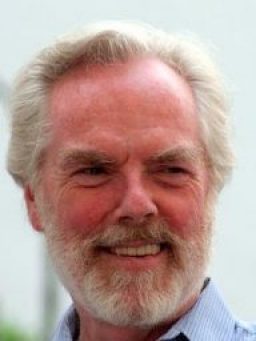
 Bob (Brahmatirtha) was born in Newark, New Jersey, in 1949, completed his B.S. in Chemistry at Rensselaer Polytechnic Institute in 1971, and received his M.S. in Geology from Rutgers University in 1975. After a twenty-year career serving as a geologist and vice-president of a large regional environmental company, he currently works as an environmental consultant to state governments. He has been a member of the Bhaktivedanta Institute since the inception in 1976, giving a presentation at their First International Conference on Life Comes from Life in 1977, and working on a multitude of projects with R.L. Thompson (Sadaputa) from 1995 through 2008. He is also a certified court mediator. He now serves as the Director of the Bhaktivedanta Institute for Higher Studies.
 Ian Cook is a Professor of Psychiatry and Biobehavioral Sciences at the David Geffen School of Medicine at UCLA, where he directs the UCLA Depression Research and Clinic Program at the Semel Institute and was the inaugural holder of the Joanne and George Miller and Family Endowed Chair in Depression Research at the Brain Research Institute. He has been a part of the PEAR/ICRL family since 1980, when he was among the first undergraduate students to conduct research at the PEAR lab. He graduated from the Yale School of Medicine and pursued his residency training and research fellowship at UCLA. His research has focused on understanding the relationships among the mind, the brain, and the body, and in translating developments in technology into more effective treatments for disorders of mood and cognition.
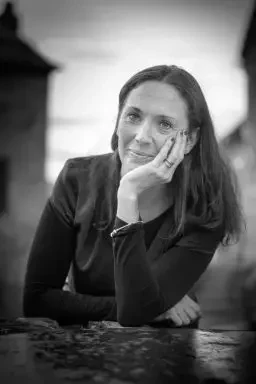
 degree from Hollis University and has accumulated a diverse work experience, spanning multiple disciplines: education, technology, business and law, predominately in support and administrative roles. She currently works for the College of New Jersey in its Office of Disability Support Services. Lynn Ann has been an administrative assistant to ICRL’s President since 2011, and has extensive familiarity with the organization’s structure and activities, along with a deep commitment to its mission.





 The largest dataset collected at PEAR used Random Event Generators, or REGs. These devices were essentially electronic coin flippers that produced a series of 1’s and 0’s; operators were instructed to influence the machines to produce more 1’s than 0’s or vice versa.