“Consciousness contemplates no more profound or perplexing a question than this: what is its role in the establishment of reality?”
– Dr. Robert Jahn and Dr. Brenda Dunne
Margins of Reality
For more than a quarter of a century the PEAR Laboratory About PEAROriginal PEAR website explored this challenging question via rigorously controlled experiments in human/machine interaction and remote perception. Their research showed that human consciousness can influence simple devices and acquire information by other than recognized sensory means. The monumental implications of this work constitute the beginnings of a “Science of the Subjective”.
This multimedia set, originally available only on DVDs but now accessible online, is one element of an extensive archiving project that seeks to preserve the heritage and accomplishments of the PEAR laboratory. It features a lecture series given annually as part of an undergraduate course in Human / Machine Interactions at Princeton University, and also includes an introductory tour of the experimental facilities that provides the viewer with a rare opportunity to experience the spirit and substance of this unique research program.
The contents of The PEAR Proposition include:
- Laboratory tour with Brenda Dunne
- Equipment and protocol demonstrations
- Five-part lecture series by Robert Jahn
- Supplementary lecture by York Dobyns
- An audio/video conversation with Jahn and Dunne
- Discussions with laboratory staff and colleagues
- Sixteen PEAR research articles
- And more!
The base price of the PEAR Proposition is $50, although ICRL Family members automatically receive a 20% discount.

 Vasileios Basios is a physicist, conducting interdisciplinary research on the foundations of complexity science and nonlinear systems, self-organization and complex matter. During his formative years, he was tutored by Ilya Prigogine, at ULB where he received his PhD, and by Emilios Bouratinos on meditation and philosophy. He is currently interested in the complex interface between action and information. Other interests include the history of ideas in science and their role in the transformation of science beyond the prevailing naïve, materialistic, mechanistic-reductionist world-view. With others from PEAR, he initiated the Mind-Matter-Mapping Project and has since published several essays for ICRL. He is also a member of the Board of the Scientific and Medical Network and the Steering Team of the Galileo Commission. Vasileios is inspired by the prospect of introducing self-reflection into the practice and understanding of science, and the emergence of a Self-Reflexive Science of Consciousness.
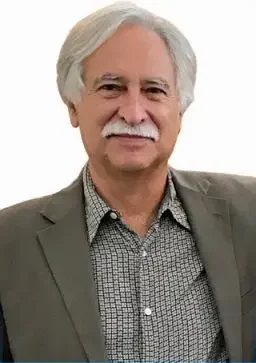
 Bob (Brahmatirtha) was born in Newark, New Jersey, in 1949, completed his B.S. in Chemistry at Rensselaer Polytechnic Institute in 1971, and received his M.S. in Geology from Rutgers University in 1975. After a twenty-year career serving as a geologist and vice-president of a large regional environmental company, he currently works as an environmental consultant to state governments. He has been a member of the Bhaktivedanta Institute since the inception in 1976, giving a presentation at their First International Conference on Life Comes from Life in 1977, and working on a multitude of projects with R.L. Thompson (Sadaputa) from 1995 through 2008. He is also a certified court mediator. He now serves as the Director of the Bhaktivedanta Institute for Higher Studies.
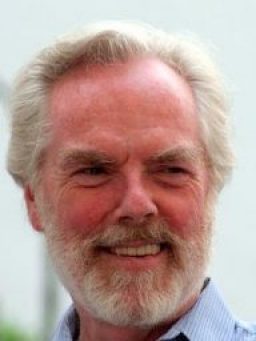
 Ian Cook is a Professor of Psychiatry and Biobehavioral Sciences at the David Geffen School of Medicine at UCLA, where he directs the UCLA Depression Research and Clinic Program at the Semel Institute and was the inaugural holder of the Joanne and George Miller and Family Endowed Chair in Depression Research at the Brain Research Institute. He has been a part of the PEAR/ICRL family since 1980, when he was among the first undergraduate students to conduct research at the PEAR lab. He graduated from the Yale School of Medicine and pursued his residency training and research fellowship at UCLA. His research has focused on understanding the relationships among the mind, the brain, and the body, and in translating developments in technology into more effective treatments for disorders of mood and cognition.
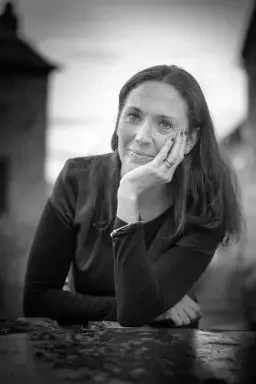
 degree from Hollis University and has accumulated a diverse work experience, spanning multiple disciplines: education, technology, business and law, predominately in support and administrative roles. She currently works for the College of New Jersey in its Office of Disability Support Services. Lynn Ann has been an administrative assistant to ICRL’s President since 2011, and has extensive familiarity with the organization’s structure and activities, along with a deep commitment to its mission.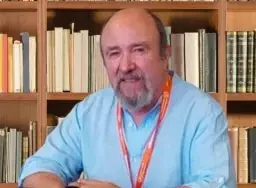










 The largest dataset collected at PEAR used Random Event Generators, or REGs. These devices were essentially electronic coin flippers that produced a series of 1’s and 0’s; operators were instructed to influence the machines to produce more 1’s than 0’s or vice versa.