Perhaps one of the most unfortunate dysfunctions of modern society is the emphasis placed on insisting what we are not, on what we cannot do or experience. Many people find themselves constrained so tightly by such insistences that they endure a lifetime of self-denial, unable to recognize the artificial boundaries imposed upon them.
In actuality, we have far greater depth and potential than most people realize, greater capacity for both perception of, and influence upon, the world around us. This is far from ‘new thinking’, for awareness of such capacities has been expressed by essentially every ancient tradition. Consequently, it is not at all surprising that there is an overwhelming body of evidence showing that we have only just begun to explore the extents of who and what we are.
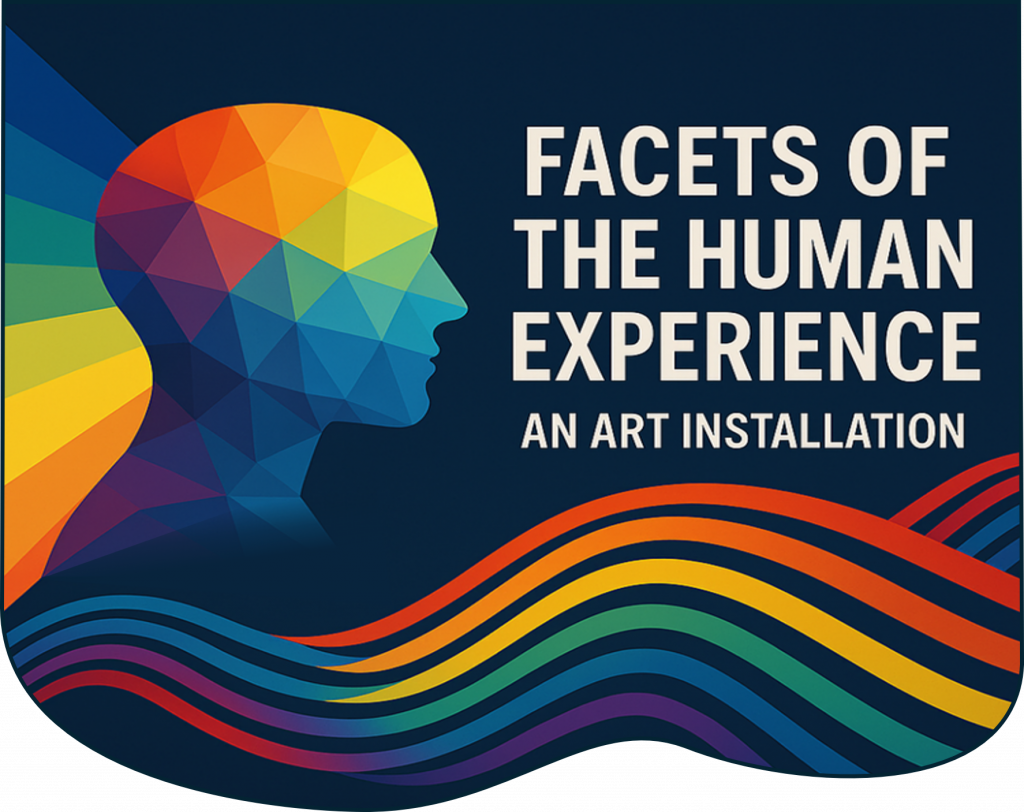
FHE invites artists to explore the nature of the human and the human experience, and to manifest a representation of one or more aspects of that exploration in artistic form. Whether one chooses a traditional medium for expression such as sculpture, performance, poetry, visual arts, theatre, etc. or something never seen before, the only constraint is that your art be focused on speaking at an emotional level.
More than just a display, we invite you, the experiencer, to share in a few sentences your experience of the art, what it “said” to you, what it meant to you. After sharing this feedback, we invite you to then read what others had to say, and ultimately what the artist intended with their work.
It is not too late to contribute to the FHE installation. New pieces of artwork are always welcome, and we encourage you to get in touch with us to discuss how to have your expressions included as part of the exhibit.

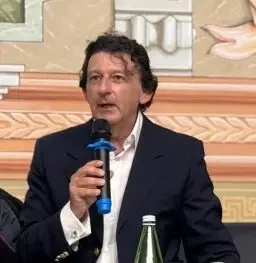
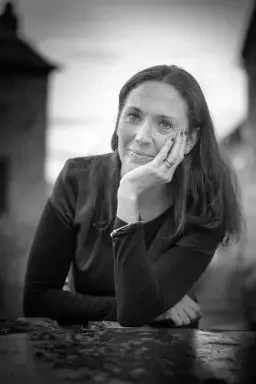
 Vasileios Basios is a physicist, conducting interdisciplinary research on the foundations of complexity science and nonlinear systems, self-organization and complex matter. During his formative years, he was tutored by Ilya Prigogine, at ULB where he received his PhD, and by Emilios Bouratinos on meditation and philosophy. He is currently interested in the complex interface between action and information. Other interests include the history of ideas in science and their role in the transformation of science beyond the prevailing naïve, materialistic, mechanistic-reductionist world-view. With others from PEAR, he initiated the Mind-Matter-Mapping Project and has since published several essays for ICRL. He is also a member of the Board of the Scientific and Medical Network and the Steering Team of the Galileo Commission. Vasileios is inspired by the prospect of introducing self-reflection into the practice and understanding of science, and the emergence of a Self-Reflexive Science of Consciousness.
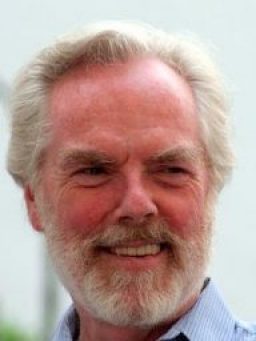
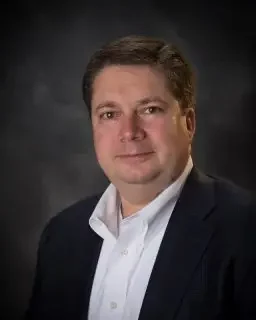
 Bob (Brahmatirtha) was born in Newark, New Jersey, in 1949, completed his B.S. in Chemistry at Rensselaer Polytechnic Institute in 1971, and received his M.S. in Geology from Rutgers University in 1975. After a twenty-year career serving as a geologist and vice-president of a large regional environmental company, he currently works as an environmental consultant to state governments. He has been a member of the Bhaktivedanta Institute since the inception in 1976, giving a presentation at their First International Conference on Life Comes from Life in 1977, and working on a multitude of projects with R.L. Thompson (Sadaputa) from 1995 through 2008. He is also a certified court mediator. He now serves as the Director of the Bhaktivedanta Institute for Higher Studies.
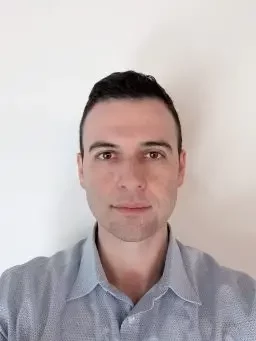
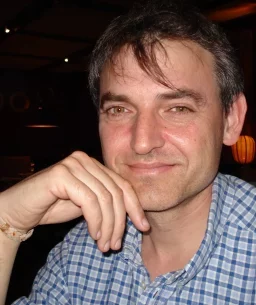
 Ian Cook is a Professor of Psychiatry and Biobehavioral Sciences at the David Geffen School of Medicine at UCLA, where he directs the UCLA Depression Research and Clinic Program at the Semel Institute and was the inaugural holder of the Joanne and George Miller and Family Endowed Chair in Depression Research at the Brain Research Institute. He has been a part of the PEAR/ICRL family since 1980, when he was among the first undergraduate students to conduct research at the PEAR lab. He graduated from the Yale School of Medicine and pursued his residency training and research fellowship at UCLA. His research has focused on understanding the relationships among the mind, the brain, and the body, and in translating developments in technology into more effective treatments for disorders of mood and cognition.
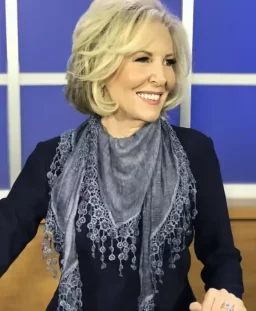
 degree from Hollis University and has accumulated a diverse work experience, spanning multiple disciplines: education, technology, business and law, predominately in support and administrative roles. She currently works for the College of New Jersey in its Office of Disability Support Services. Lynn Ann has been an administrative assistant to ICRL’s President since 2011, and has extensive familiarity with the organization’s structure and activities, along with a deep commitment to its mission.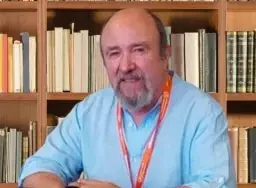


 The largest dataset collected at PEAR used Random Event Generators, or REGs. These devices were essentially electronic coin flippers that produced a series of 1’s and 0’s; operators were instructed to influence the machines to produce more 1’s than 0’s or vice versa.